EvaluationCRM comparisonAlex Mariano5 min read
Best CRM for ACA Insurance Agents in 2027: A Practical Comparison
Every CRM demo looks impressive on a slide. For ACA agents entering Open Enrollment 2027, the real difference comes down to quoting speed, DMI resolution and surviving high-volume peak weeks.
Every autumn, ACA health insurance agents face the same operational dilemma: will their software survive the November surge, or will their producers drown in disconnected browser tabs, spreadsheet updates and lost leads? With Open Enrollment 2027 approaching under heightened regulatory scrutiny and record consumer enrollment, picking the right platform is no longer a cosmetic software decision: it directly dictates your agency's book retention, producer speed and operational margins.
General-purpose sales software treats insurance like any e-commerce transaction: close the deal, mark it 'won', and move on. But ACA health insurance lives and dies after enrollment: managing Data Matching Issues (DMIs), collecting proof of income, tracking premium payments, logging CMS consent and coordinating renewals before deadlines pass. In this guide, we evaluate the software choices available to ACA agents in 2027 through a practical, agency-first lens.
“An ACA CRM is not a Rolodex with email templates. It is an operational engine that connects enrollment data to policy retention.”
The four software archetypes in the ACA market
When insurance brokers search for the best CRM, they encounter four distinct categories of software. Each archetype represents a fundamentally different compromise between flexibility, maintenance overhead and insurance-specific depth:
| Software archetype | Primary strength | ACA limitation | Hidden maintenance |
|---|---|---|---|
| Generic CRM (Salesforce, HubSpot, GHL) | Extensive marketing funnels and generic pipeline builders | No native concept of household dependents, carrier plans, or DMIs | High: requires months of consulting, custom objects, and fragile Zapier connectors |
| Legacy Insurance AMS (AgencyBloc, Radius) | Established insurance terminology and basic policy tracking | Outdated interfaces, rigid workflows, and minimal modern messaging capabilities | Medium: costly per-seat add-ons and reliance on external tools for chat and dialers |
| Standalone Quoting Portals (HealthSherpa only) | Fastest direct application submission and carrier plan lookups | No CRM capabilities: cannot manage lead pipelines, client service, or multichannel outreach | High: manual spreadsheet exports, duplicate data entry, and lost customer history |
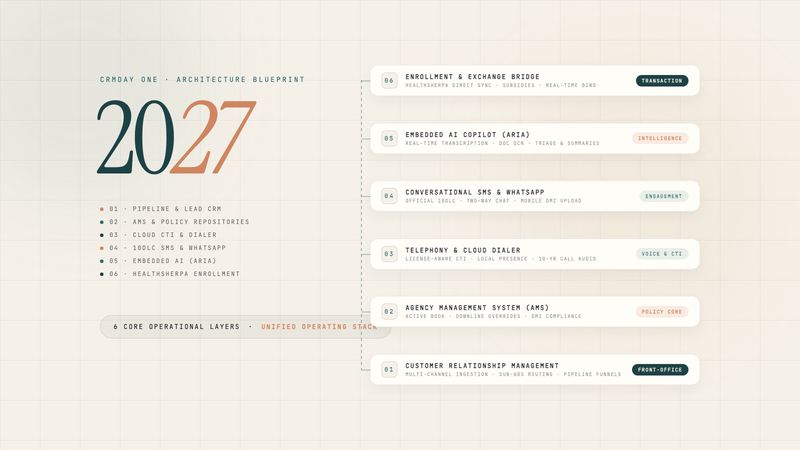
| Modern Insurance Operating Platform (CRMDAY One) | Native HealthSherpa integration, DMI resolution engine, WhatsApp, and override hierarchies | Engineered strictly for health and life agencies (not suitable for unrelated retail businesses) | Low: ready out of the box with zero custom coding required |
Looking for an operating platform built specifically for ACA health agencies? Explore CRMDAY One for ACA & Health
Five non-negotiable criteria for ACA in 2027
Before signing an annual contract or committing your agency to a rollout, test every shortlisted vendor against the five operational choke points that define ACA agencies today:
- 01Embedded quoting and application synchronization. ACA producers cannot afford to duplicate customer details between their CRM and HealthSherpa or Healthcare.gov. A true ACA CRM embeds the quoting workflow directly within the contact timeline, eliminating double data entry and synchronizing policy IDs instantly.
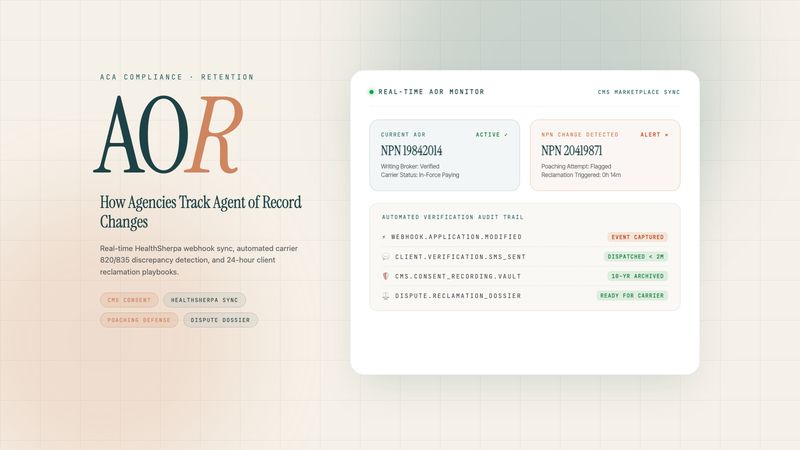
- 02Automated DMI resolution and countdowns. A closed sale that lapses 90 days later due to an unresolved income or citizenship inconsistency generates zero revenue and damages carrier relationships. The system must automatically track DMI statuses, calculate countdown clocks, and prompt clients to submit verification documents.
- 03Native WhatsApp Business and compliant two-way SMS. Modern insurance consumers, particularly immigrant and diverse communities enrolling in ACA Marketplace plans, do not answer unknown phone calls or check promotional emails. Your agents need official WhatsApp and SMS communication embedded directly inside the client record.
- 04Downline agency hierarchies and commission overrides. If your agency operates with sub-agencies, independent contractors, or downstream brokers, your platform must attribute policies to the right producer while automatically calculating overrides up the organizational tree.
- 05Compliance-by-design for CMS consent and TCPA. CMS enforcement regarding consumer consent and application review is at an all-time high. Your CRM must capture time-stamped digital consent, audio recordings, or signed authorization forms that remain archived for 10 years without manual filing.
The most expensive tool during Open Enrollment is not the CRM with the highest subscription: it is the CRM that drops leads during peak hours and lets policies cancel unnoticed in March.
Feature-by-feature evaluation: what ACA agents actually need
To help you make an objective comparison, here is how the primary approaches perform across the core capabilities that an ACA agency relies on daily:
| Capability | Generic CRM + plugins | Legacy AMS | CRMDAY One |
|---|---|---|---|
| Household & dependents model | Requires custom child objects | Supported but rigid | Native household architecture with individual plan mapping |
| Direct HealthSherpa integration | Manual CSV import or third-party webhooks | Basic sync or weekly batch upload | Deep quoting integration and automated policy sync |
| DMI countdown & document collection | Custom formula fields and manual reminders | Basic document notes, no client portal | Automated DMI engine with automated client reminders |
| Integrated WhatsApp Business & SMS | Requires third-party integrations (Twilio, Zapier) | SMS usually available as an expensive add-on | Native omnichannel inbox inside every client record |
| Commission splits & override hierarchies | Not supported without bespoke ERP tools | Basic commission tables without deep tree visualization | Multi-tier agency network module with real-time override attribution |
| CMS consent audit log (10-year retention) | External cloud storage links | Static document attachments | Native signed consent forms, IP audit trail, and voice logs |
How to choose based on your agency size and structure
There is no single tool that fits every broker equally. The right choice depends on your production volume, team composition, and licensing structure:
- Solo independent brokers: If you write fewer than 150 ACA policies per year and do not employ service staff, working directly inside HealthSherpa paired with a lightweight contact manager might suffice. However, as soon as you manage post-sale renewals and referrals, a dedicated platform pays for itself by preventing policy drop-off.
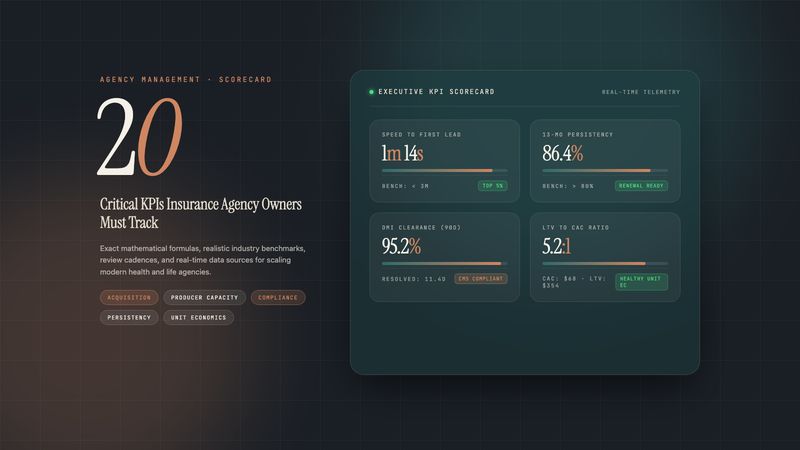
- Growing agencies (3 to 20 agents): At this scale, disconnected spreadsheets and generic CRMs break down rapidly during Open Enrollment. You need real-time lead routing, speed to lead under 60 seconds, native WhatsApp communication, and automated renewal workflows that keep retention above 85%.
- FMOs, General Agencies and networks: Managing dozens or hundreds of downstream agents requires robust hierarchy modeling, override reconciliation, and sub-agency permissions. A platform like CRMDAY One separates operating licensed seats from network members, keeping your technology overhead predictable.
Next step
Test it with your own workflows.
Start a free trial with a sample of your book, or bring your questions to a conversation with our team.
Sources
- CMS — Consumer consent and application review requirements (FAQ) (opens in a new tab)
- HealthCare.gov — How do I resolve a data matching issue? (opens in a new tab)
- Peterson-KFF Health System Tracker — Why ACA Marketplace premiums are going up in 2027 (opens in a new tab)
This article is for information only and reflects public information as of its publication date. It is not legal or tax advice. Confirm current rules with CMS, your state exchange and your carriers.