FundamentalsOpen Enrollment 2027Simone Figueira3 min read
Open Enrollment 2027: dates, deadlines and what changed for ACA agencies
The calendar, the subsidies and the eligibility rules all changed at once. Here is what ACA agencies need to know before November 1.
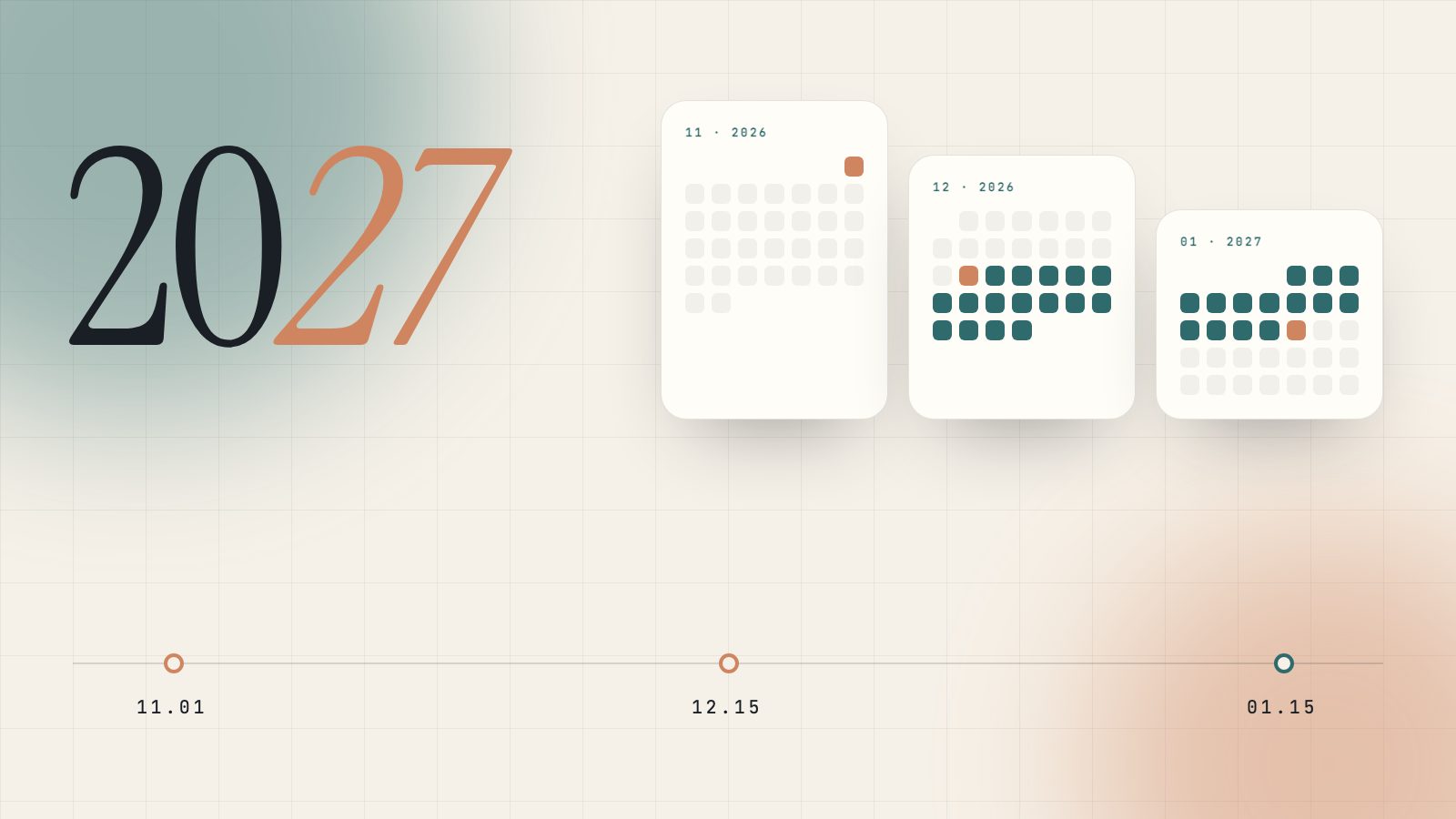
Open Enrollment for 2027 coverage is the first season in years where the calendar, the subsidies and the eligibility rules changed at the same time. For agencies, that means more questions per client, more renewals that need a real conversation and less room for improvisation. This is what we know as of September 2026.
The 2027 calendar
Nov 1, 2026
Open Enrollment begins on HealthCare.gov
Dec 15, 2026
Last day to enroll for coverage starting January 1
Jan 1, 2027
Coverage starts for enrollments completed by December 15
Jan 15, 2027
Open Enrollment ends on HealthCare.gov
Feb 1, 2027
Coverage starts for enrollments made between December 16 and January 15
A federal rule finalized in 2025 would have ended Open Enrollment on December 15 in HealthCare.gov states. In June 2026 a federal court vacated that provision (City of Columbus v. Kennedy), and CMS confirmed that the window runs through January 15, 2027. State-based exchanges set their own dates, so confirm the calendar for every state where you write business.
Treat December 15 as your real deadline. Clients who enroll after it start coverage on February 1, a one-month gap that is hard to explain once it happens.
What changed for 2027
- Enhanced premium tax credits are gone. The expanded subsidies that ran from 2021 to 2025 expired on December 31, 2025. The House passed a three-year extension in January 2026, but as of September 2026 nothing has been signed into law. Credits follow the original ACA rules again, including the cutoff at 400% of the federal poverty level.
- Premiums are rising again. Insurers proposed a median increase of about 15% for 2027, according to a Peterson-KFF review of rate filings: the second year in a row of double-digit requests.
- No more repayment caps. Starting with tax year 2026, households that underestimate their income repay the full excess advance premium tax credit when they file. An income estimate now carries real financial risk.
- Eligibility for credits narrows on January 1, 2027. Premium tax credits will be limited to citizens, lawful permanent residents, certain Cuban and Haitian entrants and COFA migrants. Many refugees, asylees and TPS holders who qualified before will no longer be eligible for credits.
- Automatic re-enrollment continues for 2027, but a client renewed without review may land in a plan with a much higher net premium.
- The monthly low-income SEP is gone. Enrollees under 150% of the poverty level can no longer count on a monthly special enrollment opportunity after the window closes.
What this means for your agency
Every one of these changes points in the same direction: more conversations per client and less tolerance for missed follow-up. Agencies that segment their book early, start renewal outreach before November and track every pending case will spend the peak weeks enrolling, not searching for who still needs attention.
- 01Segment the book by expected premium impact and eligibility risk before November 1.
- 02Schedule renewal reviews first for the clients most exposed to price increases.
- 03Update income estimates and document consumer consent on every application.
- 04Give managers a daily view of pending cases, DMIs and deadlines.
Next step
See what a structured insurance operation looks like.
Explore CRMDAY One, the platform we built for independent agents, agencies and FMOs, or keep learning with our evaluation guides.
Sources
- HealthCare.gov — Dates and deadlines (opens in a new tab)
- InsideHealthPolicy — CMS affirms 2027 Open Enrollment through Jan. 15 (opens in a new tab)
- Peterson-KFF Health System Tracker — Why ACA Marketplace premiums are going up in 2027 (opens in a new tab)
- CBPP — Five key changes to ACA Marketplaces (opens in a new tab)
- Congressional Research Service — Enhanced Premium Tax Credit FAQ (opens in a new tab)
This article is for information only and reflects public information as of its publication date. It is not legal or tax advice. Confirm current rules with CMS, your state exchange and your carriers.