EvaluationComplianceAlex Mariano3 min read
Income, documents and DMIs: avoiding surprises in Open Enrollment 2027
An inaccurate income estimate can now become a tax bill, and a missed document can cost a client their credits.

For 2027 coverage, getting the paperwork right matters more than ever. With repayment caps eliminated, an inaccurate income estimate can turn into a tax bill. With new eligibility rules, missing documentation can cost a client their premium tax credits.
Why income estimates matter more now
Advance premium tax credits are based on the income a client expects for the year. Until tax year 2025, most households below 400% of the poverty level had a cap on how much excess credit they would repay. Starting with tax year 2026 that cap is gone: any excess is repaid in full when the client files. Helping clients estimate income carefully, and documenting how they reached the number, protects them and the relationship.
- Ask for recent pay stubs, 1099s or a profit-and-loss statement for self-employed clients.
- Record the estimate, the basis for it and the client's attestation on the record.
- Remind clients to report income changes during the year.
Data matching issues (DMIs)
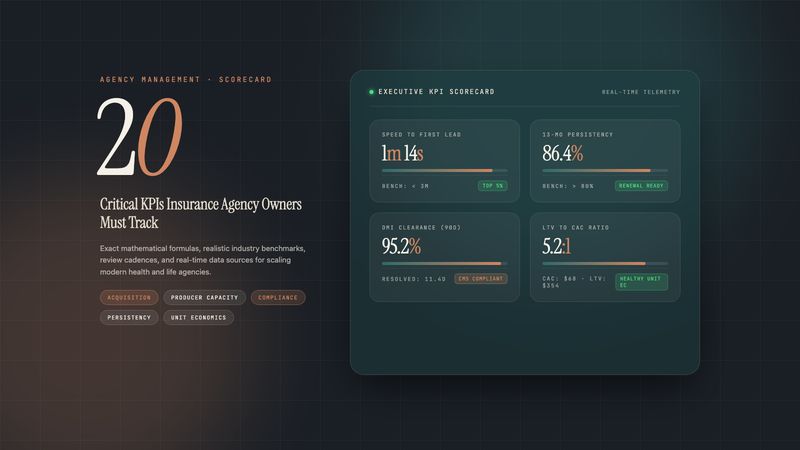
When the information on an application does not match government data sources, the Marketplace opens a data matching issue and asks the consumer for documents. Consumers usually have 90 days to resolve an income DMI, and 95 days for citizenship or immigration status. If documents don't arrive, financial help can be reduced or ended. In a busy season, DMIs are exactly the kind of work that slips.
Treat every DMI as a case with an owner, a due date and a next action:
- 01Detect: bring the DMI status into the CRM as soon as it appears.
- 02Assign: give the case to an agent and set the due date.
- 03Collect: send the document request with a secure upload or signature link.
- 04Follow up: automated reminders before the deadline and escalation when it gets close.
- 05Close: confirm the resolution and keep the record attached to the client.
Consent and documentation
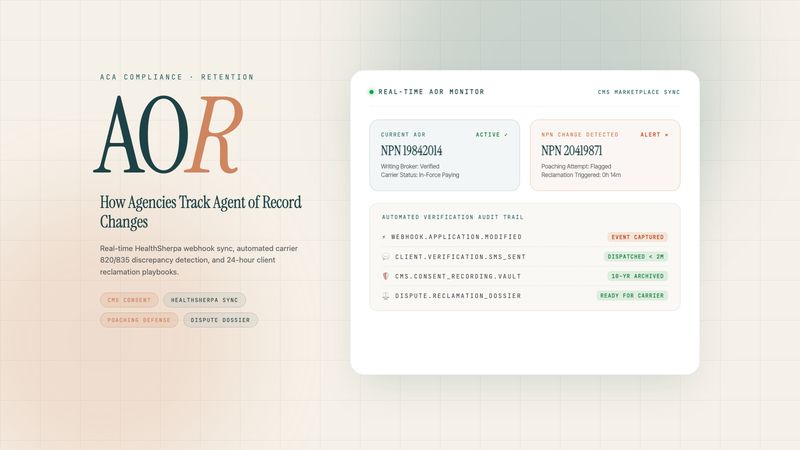
CMS requires agents and brokers to document the consumer's consent before helping them, and to document that the consumer reviewed and confirmed the application information. That documentation must be kept for at least 10 years. Keeping signed forms, attestations and conversation history on the client record makes audits, complaints and carrier questions much easier to answer.
Build the habit before November: no application goes out without an income basis, a consent record and an owner for any follow-up.
Next step
Test it with your own workflows.
Start a free trial with a sample of your book, or bring your questions to a conversation with our team.
Sources
- HealthCare.gov — How do I resolve a data matching issue? (opens in a new tab)
- CMS — Consumer consent and application review requirements (FAQ) (opens in a new tab)
- CBPP — Five key changes to ACA Marketplaces (opens in a new tab)
This article is for information only and reflects public information as of its publication date. It is not legal or tax advice. Confirm current rules with CMS, your state exchange and your carriers.