FundamentalsArtificial IntelligenceSimone Figueira5 min read
AI for Insurance Agents: 15 Real Use Cases in 2027
Forget generic chatbots and sci-fi promises. In 2027, the agencies winning on margins use AI to resolve operational bottlenecks across speed to lead, DMIs, and renewals.
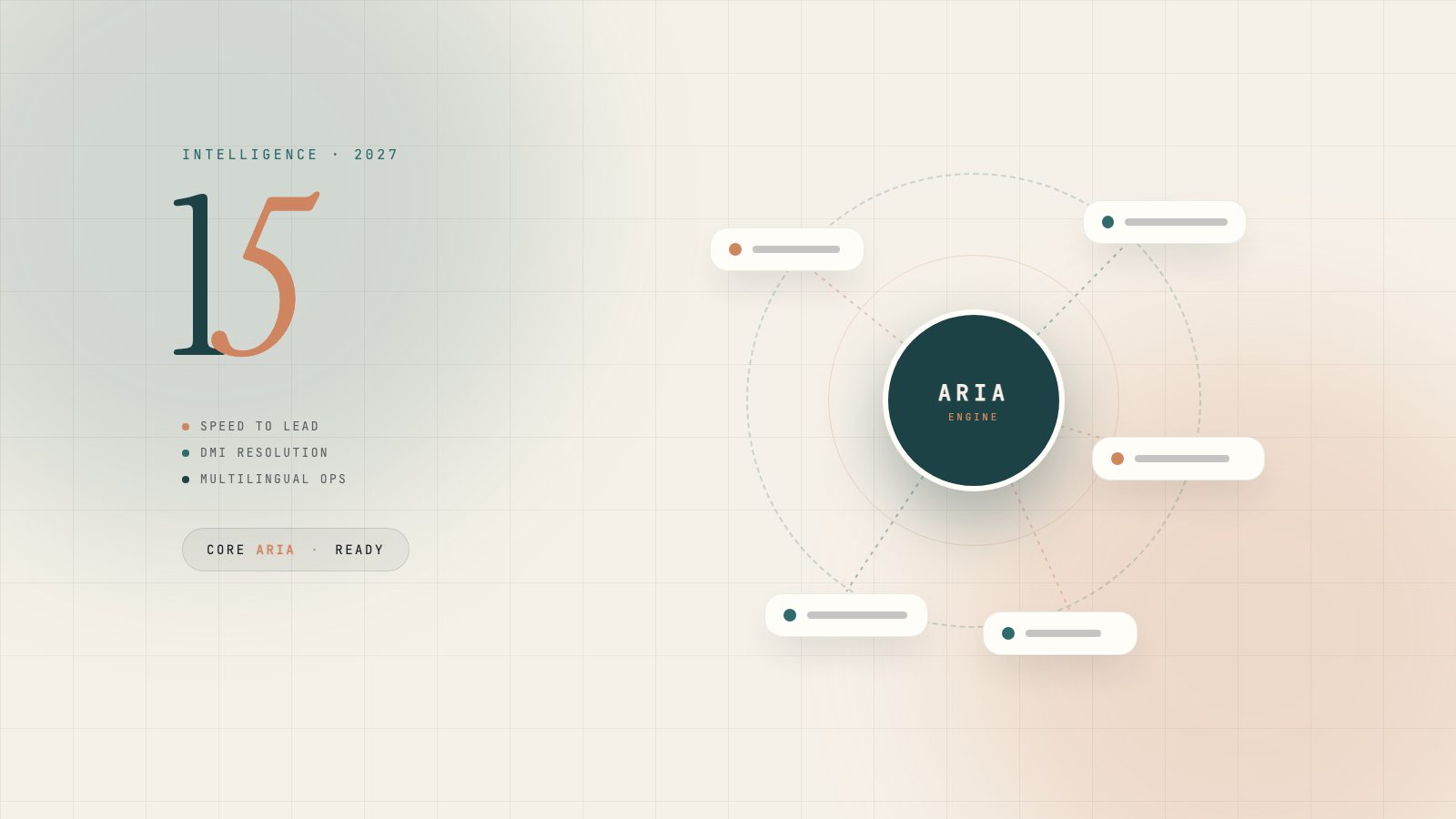
The conversation around artificial intelligence in the insurance industry has fundamentally matured. The initial fascination with generic ChatGPT wrappers and surface-level chatbots has been replaced by cold operational reality: agency owners do not need an AI that writes poetry, they need an engine that triages incoming leads in 30 seconds, catches missing income verifications before policies cancel, and coordinates renewals across thousands of households.
In 2027, artificial intelligence has ceased to be an experimental science project. High-performing agencies deploy specialized AI agents as digital coworkers embedded directly within their operational CRM. Here are the 15 practical, high-ROI use cases transforming insurance agencies today, organized across the five stages of the insurance lifecycle.
“In insurance, AI is not measured by conversational flair: it is measured by documents verified, leads contacted in seconds, and policies saved from cancellation.”
Pillar I · Lead acquisition and speed to lead
The first minutes after an insurance inquiry determine conversion rates. These three workflows eliminate manual friction during lead intake:
- 01. Sub-30-second WhatsApp qualification: When a prospect submits an ad form or website inquiry, an AI agent initiates an interactive WhatsApp dialogue instantly, confirming state of residence, household size, and current coverage status before handing the case to an available licensed producer.
- 02. Predictive lead scoring and smart routing: Rather than round-robining leads blindly, machine learning models analyze applicant readiness, language preference, and product interest to route high-intent leads to senior closers and informational inquiries to automated nurtures.
- 03. Automated CMS and TCPA consent logging: AI verifies and captures explicit consumer consent across voice calls, SMS, and WhatsApp, generating immutable digital audit logs with timestamps and IP addresses without requiring manual paperwork from producers.
Pillar II · Quoting, eligibility and plan matching
Navigating thousands of Marketplace plan variations and complex income thresholds requires precision. AI assistants accelerate plan evaluation:
- 04. Real-time APTC and subsidy modeling: AI cross-references household income projections against Federal Poverty Level (FPL) brackets, alerting agents when an applicant risks falling into the Medicaid coverage gap or facing subsidy clawbacks.
- 05. Automated doctor and prescription network cross-checks: Instead of opening five carrier portals, the agent inputs the client's current primary care physician and prescription list, and the AI instantly filters which ACA or Medicare Advantage plans include them in-network.
- 06. Consumer-friendly plan summary generator: Generates clear, personalized one-page comparison sheets in plain English, Spanish, or Portuguese, translating deductibles, copays, and maximum out-of-pocket costs into practical everyday examples.
Want to see how native AI agents handle insurance workflows inside CRMDAY One? Explore ARIA and Insurance AI Automation
Pillar III · Post-enrollment DMI and document verification
In ACA health insurance, an application submitted is only half the battle. AI prevents post-sale cancellations caused by Data Matching Issues (DMIs):
- 07. Intelligent document OCR and validation: When a client snaps a smartphone photo of a pay stub, tax return, or naturalization certificate, computer vision models check readability, match employer details against the application, and confirm legitimacy before submission.
- 08. Automated 90-day DMI countdown sequences: The AI monitors Marketplace consistency deadlines, initiating automated, friendly WhatsApp and SMS reminder cadences at day 60, day 30, and day 15 before policy cancellation occurs.
- 09. Rejection reason diagnosis and client instruction: If CMS or a carrier rejects a submitted document, the AI reads the rejection code and texts the policyholder clear, plain-language instructions on exactly what needs to be re-photographed.
Pillar IV · Multilingual customer care and back-office ops
Customer service departments in growing agencies frequently suffer from staff burnout. AI coworkers shoulder routine inquiries:
- 10. Bidirectional multilingual translation on the fly: Enables English-speaking agents to communicate fluently via WhatsApp with Spanish- or Portuguese-speaking clients in real time, with the AI maintaining insurance-specific terminology and context.
- 11. Instant post-call transcription and action item extraction: After every phone interaction, the AI generates a concise summary, tags the policy record, logs sentiment, and creates follow-up calendar tasks automatically.
- 12. Routine policy servicing and card replacement requests: Handles frequent, low-complexity customer service inquiries, such as downloading temporary ID cards, verifying payment mailing addresses, or confirming premium due dates.
The objective of AI in an insurance agency is never to replace the licensed broker: it is to strip away administrative busywork so producers spend 100% of their day building trust with families.
Pillar V · Retention, cross-selling and renewal orchestration
Book value is determined by client retention over multiple years. AI shifts agencies from reactive servicing to predictive protection:
- 13. Early churn prediction and carrier exit warnings: Machine learning algorithms flag clients whose health plan premiums are projected to spike or whose carrier is withdrawing from the county, queuing them for proactive outreach before Open Enrollment.
- 14. Contextual Life, Dental and Vision cross-selling: Analyzes household demographic changes, such as a new child, marriage, or recent home purchase, to prompt agents with personalized life insurance recommendations at opportune moments.
- 15. Automated Open Enrollment renewal sequencing: Orchestrates multi-touch renewal campaigns across WhatsApp, email, and SMS, categorizing clients into automatic re-enrollment, plan-switch required, or active review groups.
Summary scorecard: Impact of the 15 AI use cases
To help your agency prioritize which capabilities to roll out first, here is how the 15 use cases rank by operational impact and degree of automation:
| Operational pillar | Core AI capability | Primary business impact | Human oversight level |
|---|---|---|---|
| I. Lead Intake (01–03) | WhatsApp triage & speed to lead | 3x to 5x higher lead contact rates | Low: automated greeting, handoff to agent |
| II. Quoting & Plans (04–06) | Subsidy & formulary matching | Eliminates out-of-network surprises | Medium: agent validates recommendation |
| III. Post-Sale DMIs (07–09) | Document parsing & deadline alarms | Cuts post-sale cancellations by up to 80% | Low: automated document checks and texts |
| IV. Customer Care (10–12) | Multilingual chat & call notes | Saves 15+ producer hours weekly | Medium: agent reviews before sending |
| V. Retention & Renewals (13–15) | Predictive churn & renewal engine | Pushes book retention past 88% | Supervised: agent approves renewal batches |
How to deploy AI in your agency without operational chaos
The biggest mistake agencies make is buying disconnected standalone AI tools that create separate data silos. An effective AI strategy requires three practical guardrails:
- 01Embed AI where the client data already lives. Never adopt an AI tool that requires copy-pasting customer records out of your CRM. AI must run natively on top of your policies, households, and communications.
- 02Prioritize document resolution over conversational chatbots. Flashy chat widgets generate novelty, but automating DMI document collection and deadline reminders directly preserves thousands of dollars in renewal commissions.
- 03Keep human agents in the loop on licensed decisions. Use AI to prepare quotes, parse pay stubs, and draft messages, but ensure licensed professionals maintain final sign-off on plan recommendations and consumer enrollments.
Next step
See what a structured insurance operation looks like.
Explore CRMDAY One, the platform we built for independent agents, agencies and FMOs, or keep learning with our evaluation guides.
Sources
- CMS — Consumer consent and application review requirements (FAQ) (opens in a new tab)
- HealthCare.gov — How do I resolve a data matching issue? (opens in a new tab)
- FCC — Stop unwanted robocalls and texts (opens in a new tab)
- WhatsApp Business — Getting opt-in (opens in a new tab)
This article is for information only and reflects public information as of its publication date. It is not legal or tax advice. Confirm current rules with CMS, your state exchange and your carriers.