ImplementationOperating modelAlex Mariano4 min read
Designing an insurance agency operating model that scales past 10 agents
At three agents, everyone knows everything. At ten, nobody does. The fix is not more effort; it is an operating model.
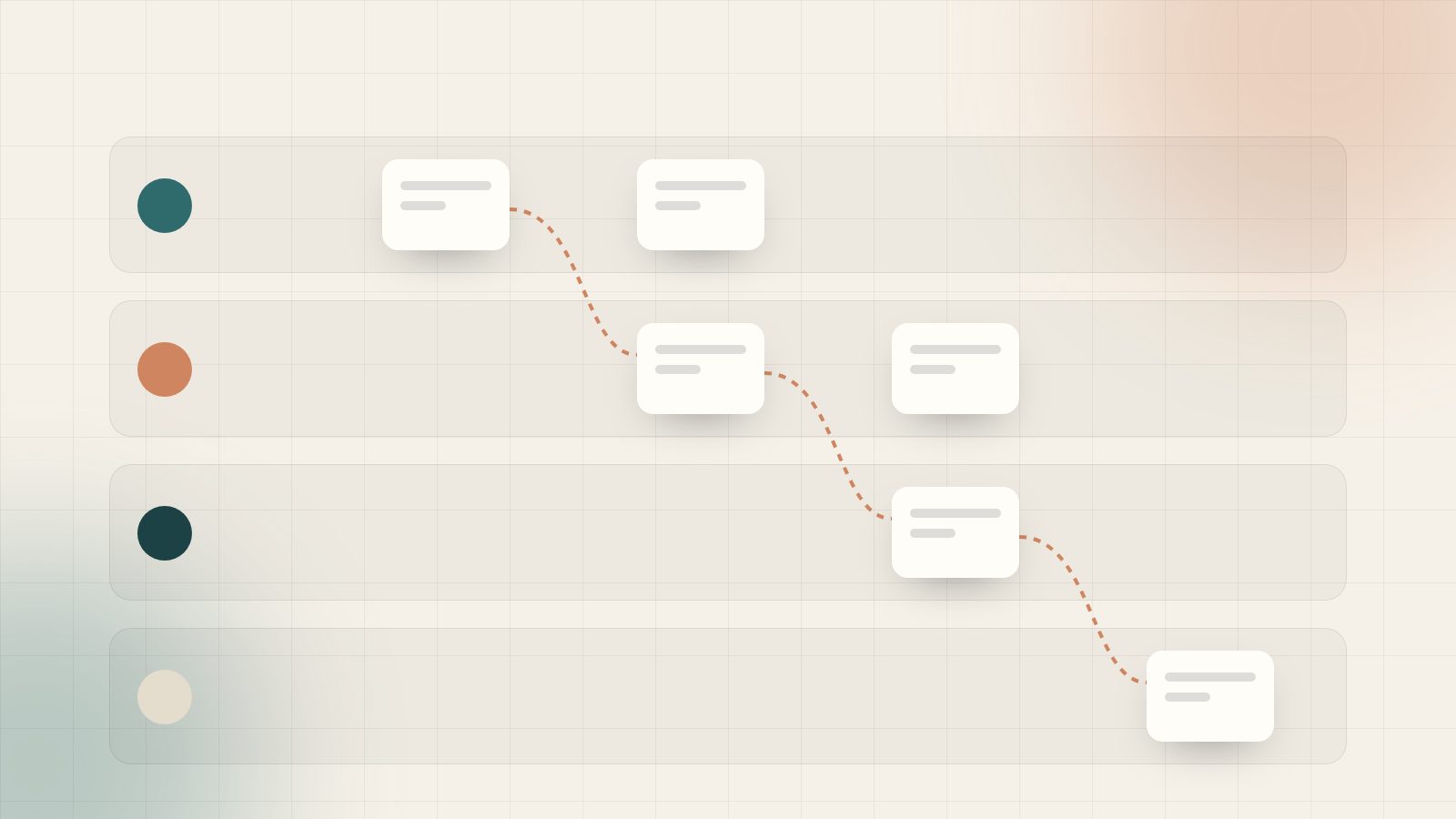
Small agencies run on proximity. The owner hears every call, knows every client and fixes problems before they grow. Somewhere between eight and fifteen people, that stops working. Leads wait because nobody is sure whose turn it is. Service requests bounce between producers. The owner becomes the bottleneck for every decision. Revenue may still be growing, but the operation is getting more fragile every month.
An operating model is the answer: a written, shared design of who does what, how work moves between people, what "on time" means and how managers see and steer the work. This guide covers the four parts of that design, based on what we see in agencies that make the jump well.
“Most agencies don't need more software. They need more structure. Structure first, then technology.”
Part 1: roles with clear boundaries
The most common growth pattern is "everyone does everything": each producer sells, serves, renews and chases documents for their own clients. It feels fair and flexible, but it caps growth, because selling time competes with service time and service always loses until it becomes a crisis. Most scaled agencies separate at least four responsibilities:
| Role | Owns | Measured by |
|---|---|---|
| Producer / sales agent | New business: leads, quotes, enrollment | Speed to lead, close rate, quality of applications |
| Service team | Existing clients: requests, changes, documents, payments | First response time, cases resolved on time |
| Retention / renewals | Renewal reviews, at-risk clients, win-backs | On-time renewal contact, retention rate |
| Operations lead | Queues, rules, data quality, automation, reporting | Unassigned work, data quality, adherence to process |
In a ten-person agency, one person may hold two roles. What matters is that the responsibility is named, not that it is a full-time job.
Part 2: handoffs that don't lose context
Specialized roles create handoffs, and handoffs are where clients get lost. Design the three critical ones explicitly:
- 01Sale to service: when a policy is bound, ownership of the relationship moves to service with a welcome contact and a complete record: policy, household, documents and conversation history.
- 02Service to retention: a defined number of days before renewal, the client enters the renewal queue with an owner, regardless of who sold the policy.
- 03Anyone to anyone: when an agent is absent or leaves, their open work is reassigned by rule, not by hunting through their inbox.
A handoff is successful when the client never has to repeat what they already told the agency.
Insurance CRMOwnership, queues and history on every recordCRMDAY One keeps owners, queues and the full conversation history on the client record, so handoffs between sales, service and renewals don't lose context.Explore the insurance CRMPart 3: service levels everyone knows
"We answer fast" is not a standard. Write down a small set of service levels, make them visible and measure them. Examples to adapt:
| Situation | Service level to define | Owner |
|---|---|---|
| New lead | Time to first useful contact, during and outside business hours | Sales |
| Client message | Time to first reply per channel | Service |
| Document request (e.g. DMI) | Days to first contact and escalation point before the deadline | Service |
| Renewal | Days before renewal date for the first contact | Retention |
| Complaint | Time to acknowledgment and to manager review | Operations lead |
The numbers are yours to set; what matters is that they exist, that the team knows them and that the CRM shows what is about to breach them.
Need formulas for these numbers? Read the 12 KPIs guide
Part 4: management rituals
Structure decays without a rhythm that reinforces it. Three rituals, run from the CRM rather than from spreadsheets, keep the model alive:
Daily · 10 min
Queue review: overdue work, unassigned leads, agents overloaded
Weekly · 30 min
Pipeline, renewals due, service levels, one process improvement
Monthly · 60 min
Retention, conversion by source, lapse reasons, rule and automation changes
When managers run these meetings from the CRM, the team keeps the CRM up to date, because that is where their work becomes visible. When meetings run from spreadsheets, the CRM becomes optional and slowly dies.
Where automation and AI fit
Automation is the last layer, not the first. Once roles, handoffs and service levels are clear, automation enforces them: assigning leads by rule, creating the renewal task at the right day, reminding before a deadline, escalating when a case stalls. AI adds speed on top: answering first contacts outside business hours, summarizing a client before a handoff, classifying requests into the right queue. Applied before the design, both only automate the confusion.
A 60-day path to the new model
- 01Weeks 1 and 2: map who does what today, including the invisible work, and draw the three handoffs.
- 02Weeks 3 and 4: name the roles, write the service levels and define ownership rules.
- 03Weeks 5 and 6: configure queues, ownership and the first automations in the CRM; start the daily ritual.
- 04Weeks 7 and 8: add the weekly and monthly rituals, review the first numbers and adjust.
Ready when you are
Put the plan in motion this week.
No credit card, set up in days, and a team that speaks English, Portuguese and Spanish if you want help.