EvaluationCRM architectureAlex Mariano4 min read
The data model behind a good insurance CRM: households, policies and ownership
Reports, automations and AI are only as good as the structure underneath. Here is the structure an insurance agency needs.
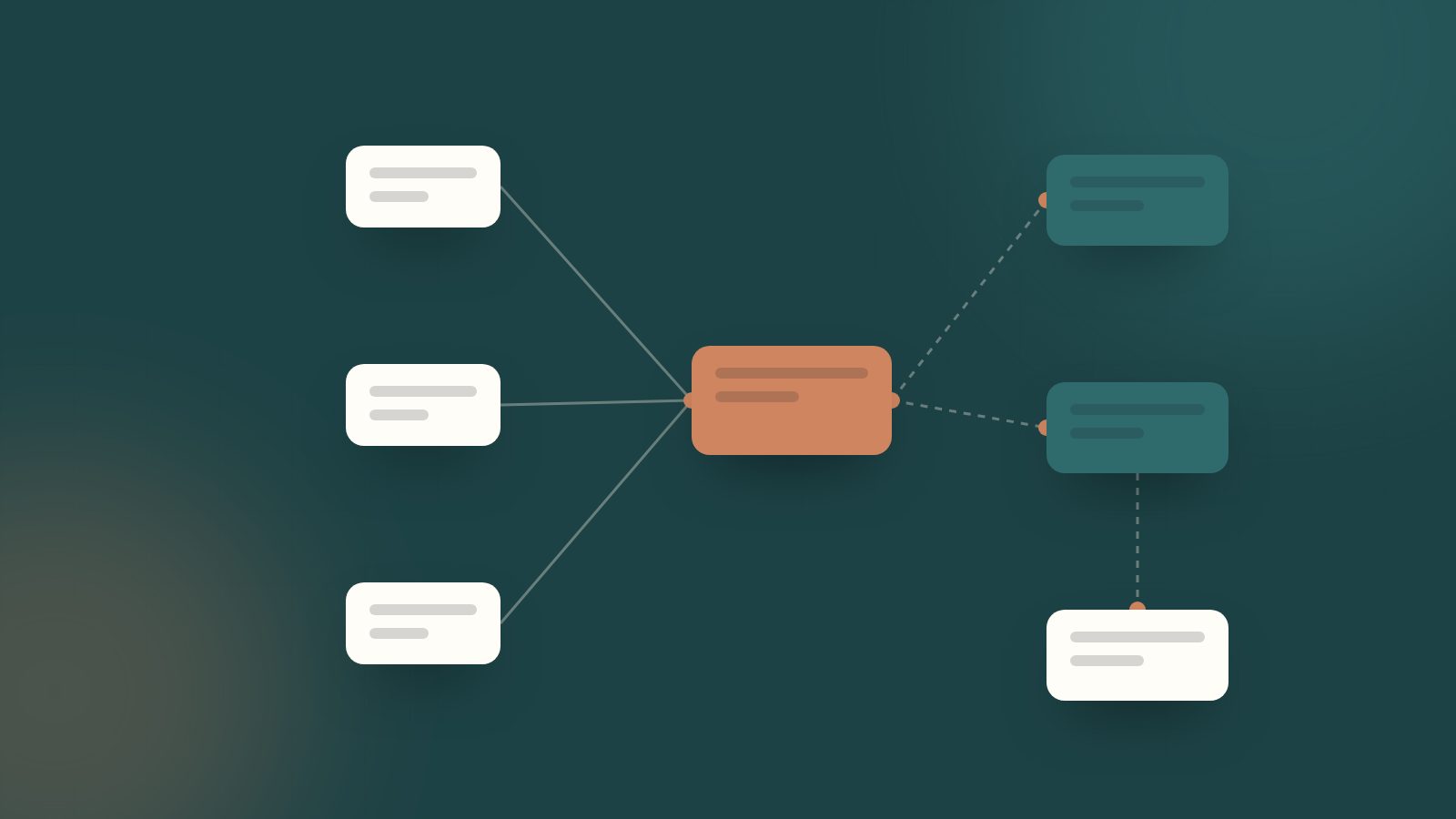
When an agency says its CRM "doesn't work", the symptoms are usually the same: duplicate clients, renewals nobody sees coming, reports that don't match reality, automations firing at the wrong person. The cause is rarely the interface. It is the data model: the way the system represents people, families, policies and responsibilities. Get it wrong and every layer built on top inherits the problem.
This guide describes the core entities an insurance CRM needs, how they relate and the decisions that matter most. It is useful whether you are evaluating a platform, configuring a generic CRM or cleaning up the one you already have.
Why the generic contact-and-deal model breaks
Generic CRMs are built around two objects: a contact and a deal. The deal moves through stages and closes. For insurance, that model breaks in three places:
- The client is a household, not a person. Coverage, income and eligibility are often decided at the household level.
- The sale is not the end. A policy has an effective date, a renewal date, a status and a history that continues for years.
- Ownership is layered. The writing agent, the service owner, the agent of record and the agency hierarchy can all be different.
The core entities
| Entity | What it represents | Key fields |
|---|---|---|
| Person | Each individual: applicant, spouse, dependent, beneficiary | Name, date of birth, contact details, language, consent records |
| Household | The group that shares coverage decisions | Address, household size, estimated income, primary contact |
| Policy | One coverage contract, any line | Line, carrier, plan, effective and renewal dates, status, premium, subsidy |
| Policy member | Who is covered under each policy | Person, relationship, role (primary, dependent) |
| Opportunity | A potential sale or change, before it becomes a policy | Source, stage, owner, line, next action |
| Activity | Every interaction: call, message, email, meeting, note | Channel, direction, date, owner, summary |
| Task / case | Work that must be done: DMI, renewal, service request | Type, due date, owner, status, linked policy |
| Document | Signed forms, proofs, IDs, applications | Type, date, linked person or policy, retention rule |
| Commission line | Revenue attributable to a policy and a producer | Policy, period, amount, producer, level, override |
If a policy can't exist without a deal, or a household can't exist without a company record, the model was built for another industry.
Five decisions that matter most
- 01Household as a first-class object. People belong to a household; policies cover members of it. This is what makes cross-line conversations and aging-in triggers possible.
- 02Policy separate from opportunity. The opportunity ends when the sale closes; the policy lives on. Mixing them makes renewals invisible.
- 03Status with dates, not only labels. "Active" is not enough: effective date, renewal date, termination date and reason are what drive automation and retention metrics.
- 04Ownership at the right level. A household owner for the relationship, a writing producer and agent of record per policy, a task owner per case.
- 05Events, not just fields. Changes such as an agent-of-record change, a new DMI or a termination should create an event with a date, so the system can react and report.
Identity and deduplication
Duplicates are the most common data problem in insurance CRMs, because clients arrive from many sources: lead forms, carrier portals, enrollment platforms, referrals, walk-ins. A good model defines, in advance, how a person is recognized:
- A stable external identifier when one exists, such as the member or application identifier from the enrollment platform.
- A fallback match on normalized email and phone, with date of birth to break ties.
- A review queue for uncertain matches instead of automatic merges that can mix two families.
- Protection for manual corrections, so the next import doesn't undo a fix your team made on purpose.
Matching, preview and conflict review are the core of a trustworthy enrollment integration. Read the HealthSherpa integration checklist
Data that must be protected
An insurance CRM stores sensitive information: dates of birth, income, immigration status, health-related plan choices, identity documents. The data model should make protection easy: permissions by role and hierarchy, documents stored with the record instead of in email attachments, clear retention rules per document type and an audit trail of who viewed or changed what.
“Design the data first. Automation and AI amplify whatever structure they sit on, including its mistakes.”
How this enables automation and AI
| Capability | What it needs from the model |
|---|---|
| Renewal queues | Policies with renewal dates, status and an owner |
| DMI follow-up | Cases linked to a policy and person, with due dates |
| Agent-of-record alerts | Events on policy ownership changes |
| Cross-sell triggers | Households with members, ages and existing lines |
| Commission reports | Commission lines tied to policies and a producer hierarchy |
| AI summaries | Activities and cases linked to the person and household, in order |
A quick audit of your current CRM
- 01Can you list every person in a household and every policy that covers them, in one view?
- 02Can you filter policies renewing next month by line and owner?
- 03Do you know how many duplicate people exist today?
- 04Can you see when an agent-of-record change happened and who handled it?
- 05Are signed consents and documents attached to the person or policy they belong to?
Next step
Test it with your own workflows.
Start a free trial with a sample of your book, or bring your questions to a conversation with our team.