EvaluationACA salesSimone Figueira5 min read
Why ACA quoting belongs inside your CRM workflow, not in another browser tab
Every ACA sale passes through a quote. In most agencies, that quote happens in a tab the CRM can't see. Here's what that costs, and what a connected quote workflow looks like.
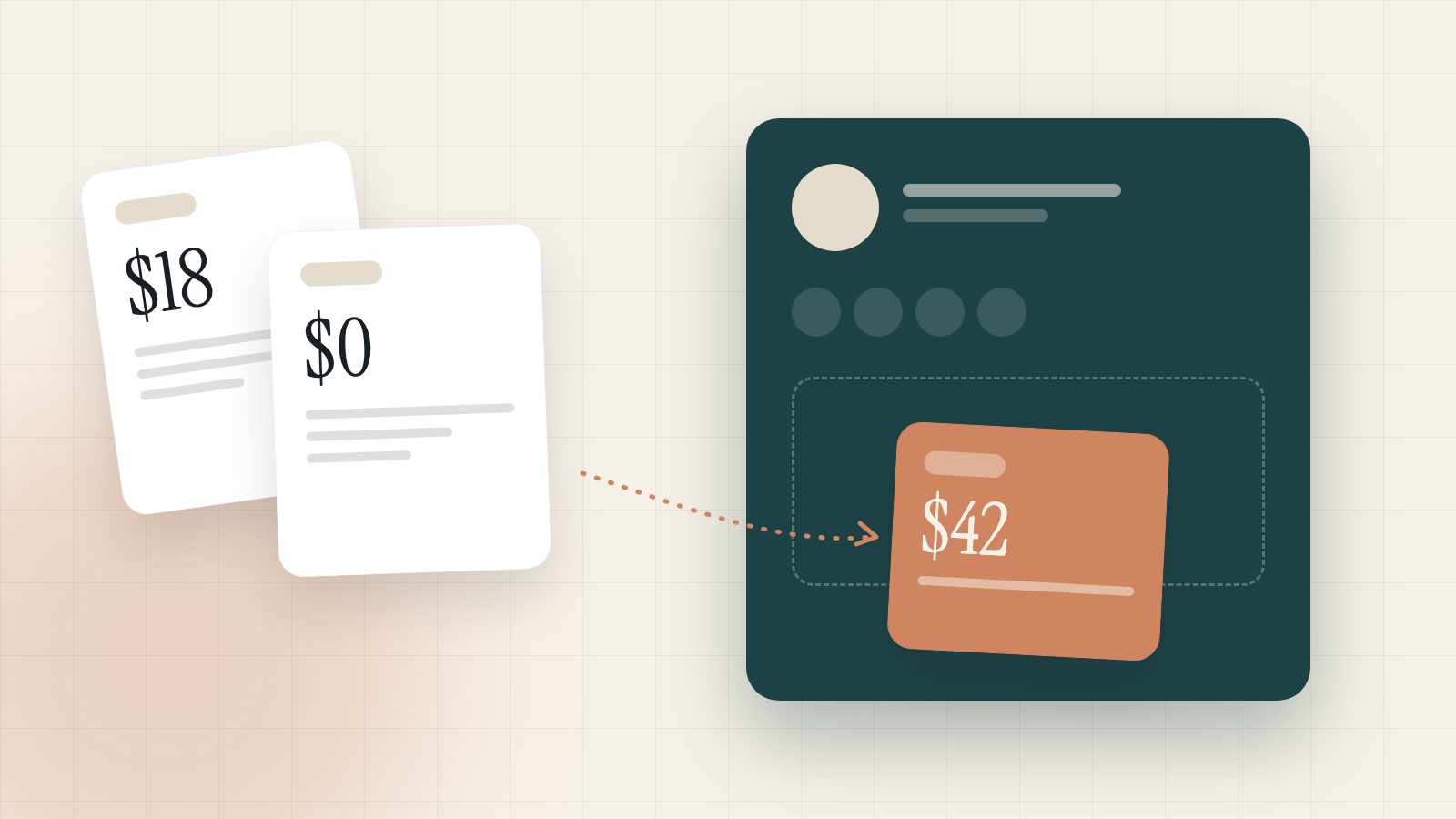
Ask an ACA agency where its sales process lives and most will point to the CRM. Ask where the quote happens and the answer changes: a marketplace site, an enrollment platform, a quoting tool, sometimes all three. The single most important moment of an ACA sale, when the client sees real plans and prices, often happens outside the system that's supposed to remember the relationship.
This article explains why that gap matters, what an embedded quote workflow should do and how to evaluate one. It also looks at why the 2027 season makes the question more urgent.
What goes into an ACA quote
A marketplace quote is not a price lookup. It's a small data-collection exercise, and most of that data is exactly what the agency needs later.
| Input or output | Why the agency needs it later |
|---|---|
| ZIP code and county | Plan availability and renewal options next year |
| Household members and ages | Who is covered, who may age out, who could be cross-sold |
| Estimated annual income | Subsidy eligibility and income-related verification requests |
| Plans compared | What the client rejected and why, for renewal conversations |
| Premium, deductible, network | The basis of the client's choice and future service questions |
| Selected plan | The policy that should exist after enrollment |
When the quote happens in a separate tab, all of this is either retyped into the CRM, summarized in a note or lost. None of those outcomes is good.
Where context breaks in a disconnected quote
- 01Double entry. The agent types household and income into the quoting tool, then again into the CRM, and possibly a third time into the application. Differences between those copies are how income and household inconsistencies begin.
- 02Lost alternatives. The client compared three plans and chose one. Six months later, when they call about a deductible, nobody knows what they turned down.
- 03Invisible pipeline. A quote that wasn't accepted on the spot is a warm opportunity. If it lives only in another tool, it rarely gets a follow-up task.
- 04Broken handoffs. When a service agent takes over, they see a client and maybe a policy, but not the reasoning that led to it.
- 05Unmeasurable conversion. Quote-to-bind rate is one of the most useful ACA metrics. You can't calculate it if quotes aren't linked to opportunities.
The quote is the moment the client tells you the most about themselves. A workflow that throws that information away is expensive, even if nobody sees the bill.
Quote-to-bind and close rate by source are part of our agency scorecard. Read: 12 KPIs every insurance agency should track
Why 2027 raises the stakes
The enhanced premium tax credits expired at the end of 2025, and median proposed premium increases for 2027 are around 15%, according to Peterson-KFF analysis of insurer filings. For agencies, that translates into operational pressure:
- More clients will ask to compare plans instead of auto-renewing, so each agent runs more quotes per client.
- Income accuracy matters more when subsidies are more sensitive to it and APTC repayment caps no longer apply for 2026 tax years onward.
- Clients who drop coverage for cost reasons may come back mid-year after a qualifying event, and the agent who remembers their previous comparison has an advantage.
- Renewal conversations become explanations of change. Having last year's choice and alternatives on screen makes them shorter and more credible.
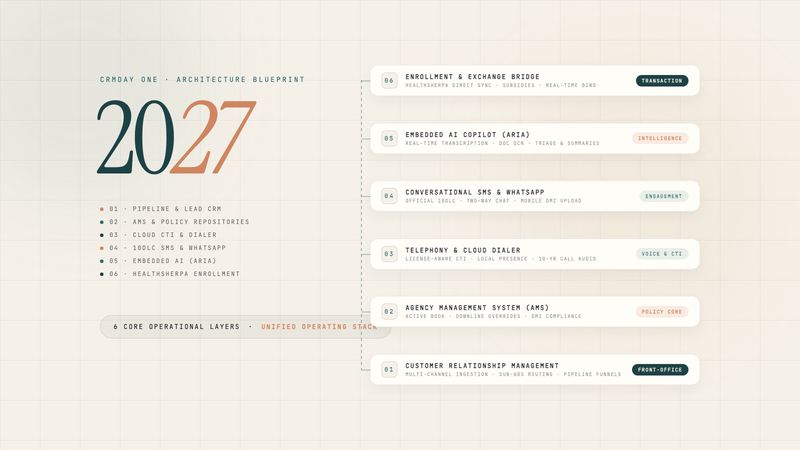
Want the full picture of the 2027 season? Read: Open Enrollment 2027 dates and changes
What an embedded quote workflow should do
Embedding a quote means more than putting a link to a marketplace inside the CRM. A useful embedded workflow has five properties:
- 01It starts from the client record. The agent launches the quote from the client profile, and known data such as location and household is already there.
- 02It uses real marketplace data. Plans, premiums, deductibles and networks come from Healthcare.gov, not from a static table that goes stale.
- 03It supports the comparison conversation. Premiums, deductibles and networks are laid out so the agent can walk the client through trade-offs.
- 04It returns the choice to the workflow. The selected plan attaches to the policy workflow and the opportunity, not to a PDF on someone's desktop.
- 05It keeps proposal and follow-up together. If the client needs time, the follow-up task sits next to the quote it refers to.
How the quote connects to the rest of the lifecycle
Before
Lead captured and qualified, by an agent or by Aria, with household and income
Quote
Plans compared from the client profile using real Healthcare.gov options
Choice
Selected plan returned to the policy workflow with the call notes
Consent
Consent signed through a single-use link and attached to the record
After
Policy active, household linked, renewal and service history in one place
Aria, CRMDAY One's AI assistant, can also pull real ACA options through Healthcare.gov during a first conversation, so a lead that arrives at night can see indicative options before a licensed agent takes over with a summary. The agent still runs the formal comparison and makes the recommendation; the AI shortens the path to that conversation.
Questions to ask when evaluating quoting in a CRM
| Question | A good answer sounds like |
|---|---|
| Where does the plan data come from? | Directly from Healthcare.gov, not a manually maintained table |
| Can I start a quote from an existing client? | Yes, from the profile, with known data carried over |
| What happens to the selected plan? | It returns to the policy workflow attached to the client |
| Is the quote linked to the opportunity? | Yes, so quote-to-bind can be measured |
| Can follow-up be scheduled from the quote? | Yes, the proposal and the next action stay together |
| Is quoting an extra cost? | Ask directly; in CRMDAY One it's included in the base |
A practical way to test it
Don't evaluate quoting with a demo script. Take three real (anonymized) cases from last season: a single adult, a family with mixed ages and a household with variable self-employment income. Run each one end to end in the trial and answer three questions: how many times did you type the same data, where did the selected plan end up, and could a colleague pick up the case tomorrow without calling you?
If the answers are once, on the client record and yes, the quote is part of your workflow. If not, it's still a tab.
Next step
Test it with your own workflows.
Start a free trial with a sample of your book, or bring your questions to a conversation with our team.
Sources
- Peterson-KFF Health System Tracker — Why ACA Marketplace premiums are going up in 2027 (opens in a new tab)
- CBPP — Five key changes to ACA Marketplaces (opens in a new tab)
- Congressional Research Service — Enhanced Premium Tax Credit FAQ (opens in a new tab)
This article is for information only and reflects public information as of its publication date. It is not legal or tax advice. Confirm current rules with CMS, your state exchange and your carriers.